In recent years, lab-grown diamonds have transformed the global jewelry industry. More consumers are now choosing sustainable, ethical, and affordable alternatives to traditional mined diamonds without sacrificing beauty or quality.
At REDSACRE, we believe modern luxury should combine innovation, responsibility, and exceptional craftsmanship. That’s why lab-grown diamonds have become an essential part of contemporary fine jewelry collections.
In this guide, we’ll explore what lab-grown diamonds are, how they are created, how they compare to natural diamonds, and why they are becoming the future of the jewelry market.
What Are Lab-Grown Diamonds?
Lab-grown diamonds, also known as man-made diamonds or cultured diamonds, are real diamonds produced in advanced laboratory environments.
They have exactly the same:
- Chemical composition
- Crystal structure
- Hardness
- Fire and brilliance
as natural diamonds formed beneath the Earth’s surface.
The only difference is their origin.
Natural diamonds take billions of years to form underground, while lab-grown diamonds can be created within a few weeks using advanced technology.
To the naked eye, even professional jewelers cannot easily distinguish a lab-grown diamond from a mined diamond without specialized equipment.
How Are Lab-Grown Diamonds Made?
At REDSACRE, we appreciate the innovation behind modern diamond-growing technology. Lab-grown diamonds are primarily produced using two advanced methods:
1. HPHT (High Pressure High Temperature)
This method recreates the natural conditions deep inside the Earth.
The HPHT Process:
- A small diamond seed is placed into a high-pressure chamber
- Extreme heat exceeding 2,000°C is applied
- Intense pressure allows carbon atoms to crystallize around the seed
- The crystal gradually grows into a rough diamond
- The stone is then cut and polished into a finished gemstone
HPHT diamonds are known for their excellent clarity and strong crystal structure.
2. CVD (Chemical Vapor Deposition)
CVD is one of the most advanced technologies in the modern jewelry industry.
The CVD Process:
- A thin diamond seed is placed inside a vacuum chamber
- Carbon-rich gases such as methane and hydrogen are introduced
- The gases are heated into plasma
- Carbon atoms bond layer by layer onto the seed
- Over time, the crystal develops into a full diamond
CVD diamonds are highly popular for fine jewelry due to their purity and production flexibility.
Are Lab-Grown Diamonds Real?
Yes — absolutely.
Lab-grown diamonds are genuine diamonds, not diamond simulants like cubic zirconia or moissanite.
They possess:
- The same carbon composition
- The same crystal structure
- The same durability and hardness (Mohs 10)
- The same brilliance and sparkle
Even standard diamond testers identify lab-grown diamonds as real diamonds because they share the same thermal conductivity as mined stones.
Industry organizations including the Gemological Institute of America (GIA) and the Federal Trade Commission (FTC) recognize lab-grown diamonds as authentic diamonds.
Lab-Grown Diamonds vs Natural Diamonds
Although visually identical, there are several important differences between lab-grown and mined diamonds.
| Feature | Lab-Grown Diamonds | Natural Diamonds |
|---|---|---|
| Origin | Created in laboratories | Formed naturally underground |
| Production Time | Several weeks | Billions of years |
| Sustainability | More environmentally controlled | Requires mining |
| Ethics | Conflict-free production | Supply chain may vary |
| Price | More affordable | Higher due to rarity |
| Availability | Consistent supply | Limited natural resources |
For many modern consumers, lab-grown diamonds provide the ideal balance between luxury, sustainability, and value.
Understanding the 4Cs of Lab-Grown Diamonds
Like natural diamonds, lab-grown diamonds are graded using the internationally recognized 4Cs:
1. Cut
Cut determines how brilliantly a diamond reflects light.
Cut Grades Include:
- Excellent
- Very Good
- Good
- Fair
- Poor
A well-cut diamond delivers maximum brilliance and sparkle.
2. Clarity
Clarity refers to internal inclusions and surface imperfections.
Common Clarity Grades:
- FL (Flawless)
- IF (Internally Flawless)
- VVS1–VVS2
- VS1–VS2
- SI1–SI2
- I1–I3
For most fine jewelry, VS1 to VS2 offers the best balance between appearance and value.
3. Color
Diamond color grades measure how colorless a stone appears.
Color Categories:
- D–F: Colorless
- G–J: Near Colorless
- K–M: Faint Color
- N–R: Very Light Color
- S–Z: Light Color
Near-colorless grades are highly popular in luxury jewelry collections.
4. Carat
Carat measures the weight of a diamond.
Larger carat diamonds are typically more valuable, but cut quality often has a greater impact on visual brilliance than size alone.
How to Identify a Lab-Grown Diamond
Because lab-grown diamonds are physically identical to natural diamonds, specialized equipment is usually required for identification.
Professional gemological laboratories use:
- Spectroscopy
- Photoluminescence testing
- Advanced imaging systems
Many lab-grown diamonds also include laser inscriptions on the girdle indicating their laboratory origin.
Why More Jewelry Brands Are Choosing Lab-Grown Diamonds
At REDSACRE, we see growing demand for sustainable luxury jewelry around the world.
Here’s why modern consumers prefer lab-grown diamonds:
Better Value
Customers can purchase larger, higher-quality stones at more accessible prices.
Ethical Sourcing
Lab-grown diamonds eliminate many concerns associated with traditional diamond mining.
Sustainable Production
Controlled production environments help reduce environmental impact.
Consistent Quality
Advanced technology allows for stable supply and excellent quality control.
Modern Luxury Appeal
Today’s consumers value innovation, transparency, and responsible purchasing decisions.
Lab-Grown Diamonds in Modern Jewelry Design
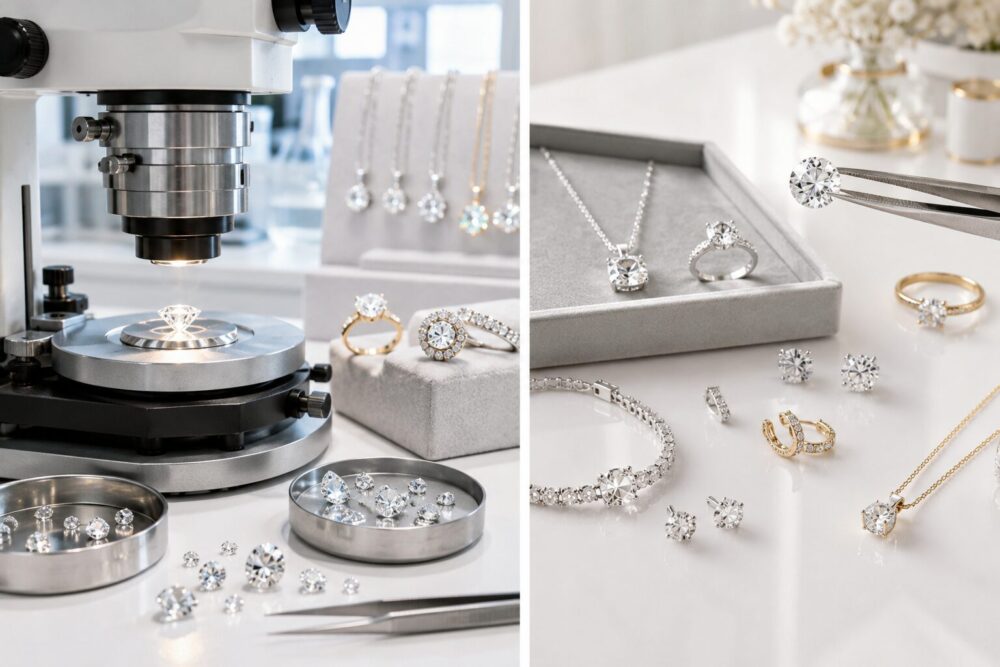
Lab-grown diamonds are now widely used in:
- Engagement rings
- Wedding jewelry
- Fashion jewelry
- Tennis necklaces
- Earrings
- Custom luxury jewelry collections
At REDSACRE, we combine advanced diamond technology with refined craftsmanship to create elegant jewelry pieces designed for modern lifestyles.
Conclusion
Lab-grown diamonds are redefining the future of fine jewelry.
They offer:
- The same beauty and durability as natural diamonds
- More accessible pricing
- Ethical and sustainable sourcing
- Exceptional quality and brilliance
As consumers continue shifting toward responsible luxury, lab-grown diamonds are becoming one of the fastest-growing segments in the global jewelry market.
At REDSACRE, we are proud to help brands and businesses create premium lab-grown diamond jewelry that combines innovation, craftsmanship, and timeless elegance.